
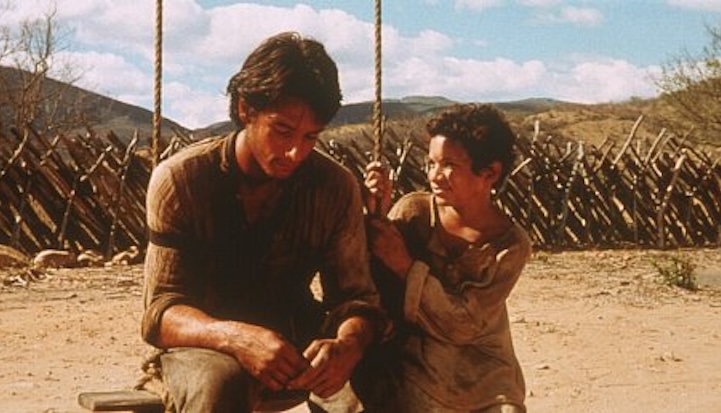
Director: Walter Salles
Year: 2001
One of Walter Salles’ earliest feature films (hot on the heels of Central Station and Midnight), Behind The Sun is a dreamy, parched meditation on the wasteful futility of revenge.
In the early 20th century, a poor family ekes out a living in the arid Bahian badlands, cornered by encroaching economic change. Locked in a blood feud with their neighbours, generations of sons are urged to kill each other, an eye for an eye. Rodrigo Santoro (Carandiru, O Último Azul) is doomed middle son Tonho Breve. Ruled by an embittered father and the shadow of his murdered older brother, with his kid brother under his wing, he has played his part in the feud, and awaits his turn. In Santoro’s hands Tonho is a walking ghost, moving through the drama in dazed despair, as their lugubrious neighbours loom on the horizon (including a decidedly clerical Wagner Moura as the rival son) – until the circus comes to town, dangling hope, a change of destiny and perhaps even a reason to live.
The overriding sense is one of being hypnotised. An oppressive, saturated ochre and black palette captures the stifling mood perfectly, as the family labours in the dust and bloodstained shirts yellow under a pitiless, scorching sky, overseen by a tyrannical father who sees grief as a fair price for family honour. Little brother Pacu (an animated, vivacious Ravi Ramos Lacerda), is the only Breve with daydreams beyond his family’s grim customs. Handing the narration to him is an inspired choice, adding pathos, levity and the hope of something better.
And then there’s the film’s political heartbeat. As the rural workers of this remote region face impoverishment at the hands of economic evolution and the rapacious entrepreneurs who command its frontiers, isn’t it tragic and timeless that all their effort and violence is focused on each other, rather than the cause of their collective woes? Easier to pursue local vendettas than find common cause against a greater challenge – same as it ever was.
Behind The Sun‘s themes are not new – sons resisting paternal expectations, the madness of cycles of violence – but Salles (with one of Brazil’s best screenwriters, Karim Aïnouz) imbues them with poetry, making this a memorable, elegiac picture of the tussle between modernity and tradition, honour and freedom.